
A Christian story-teller, poet, and thinker writing from Ottawa, Ontario.

Author: toddanderson

  • Inspiration

    Inspiration

    Warning: this post discusses sensitive matters related to mental health and depression.

    More than ten years ago, before my wife and I moved to Ottawa, I remember sitting with my guitar and composing a song which has mystified me ever since the day I scrawled it on loose-leaf.  Today’s analysis will consider briefly the lyrics and music and discuss the idea of inspiration.

    The Cliff

    Upon the cliff in summer time
    The wind is fair the seagulls cry
    I find your place a sacred stone 
    Which moss replaced used for a throne
    And it is wet trembles in my hand
    You cannot speak I cannot stand
    The morning flees a naked band
    Of colour streams across the strand
    You walked these woods alone
    The trees held out their hands
    The leaves played with your hair
    The darkness crept in there

    The yellow clouds that bickered north 
    Brought piercing rains to cut my soul
    Tin hedges clapped beneath the brine 
    The sea’s red foam churned overnight
    And as the wake made a dash
    For freedom’s eye in a piece of glass
    You strode the crag in a burnished dress
    Felt sunset’s brush paint cheek and sash
    You left the world alone
    The sea welcomed you in
    The long train of gin
    Whistled in the bones
    Oh in the bones

    The wretched hike the winter gales
    The icy teeth and frosted nails
    Upon my skin I wear your scarf
    The ocean’s roar a mane of rime
    Encircled here I feel your doubt
    The ghostly mood the demon shout
    Of lover’s guilt of unsaid grief
    An empty bed a kitchen cleaned
    Your tracks were fresh and as I reached
    That sacred spot my hand was slow
    You never glanced I let you go

    The occasion for this song is perhaps the most mystifying part of its composition.  Thematically it is completely unrelated to anything in my own experience, nor was it a response to an emerging event in the world.  It was not even a response to a vivid encounter with nature nor the product of drugs or other substances.  Instead, it came to me all at once as pure inspiration.  I don’t mean the kind that sets apart sacred texts, but borrowing from the ancient idea of a muse that uses the poet as a vessel, I confess that I supplied no particular agency or explicit intellectual labour in its production. 

    Put simply, I don’t know what it means.  Or, I don’t know what it is supposed to mean, or what the author’s intent is.  In one respect, this is exciting, because it offers a rare opportunity to get out of the way in the interpretive process. But, this poem haunts me, not due to the tragic scene it paints (though this is heart-wrenching), but for some of the completely wild lines that make no sense but somehow place pictures in my mind:

    “The morning flees a naked band
    Of colour streams across the strand.”

    Now I can see the imagery of the sun painting the clouds in wonderful hues as it moves across the sky. But, what is a naked band of colour?

    “Tin hedges clapped beneath the brine…”

    What are these tin hedges?  How are they beneath the briny water, and what does their clapping represent?  Perhaps it is a reference to the churning water as silvery waves (that look somehow like hedgerows) crash into each other as they are tossed back and forth far below the cliff?

    “And as the wake made a dash
    For freedom’s eye in a piece of glass”

    I have no clue.  The waves are pictured as trapped, and they are making a run for their freedom – but not just freedom, they are aiming for the eye of freedom found in a piece of glass.  Perhaps it is best to think of the “eye” as a gateway or portal, like the eye of a camel, which makes the point that freedom has a very specific and narrow entryway.  A piece of glass might refer to translucent bottles that wash up on the shoreline or a looking glass.

    Now this last bit seems like a great candidate for the nonsense bin and we should perhaps not pay it much heed, chocking it up to bad poetry.  Fine by me!  What this gesture cannot account for is how these lines, and the rest of the odd phrases “long train of gin / whistled in the bones” still produce vivid pictures in the mind.  How can our imaginations process such nonsense into something which suggests moral meaning or power?  These waves, with all their strange dashing and clapping, seem exactly appropriate for the stormy emotional moment overtaking the subject of the poem.

    I do recall one important moment in the composition of the song and it is the way my musical instincts changed in the last stanza.  The mood intensifies.  The music, simple as it is with basic major chords like A, E, and D (with a C# and B to transition the final part of each stanza), became even simpler, and I remember the heavy downstrokes of the D chord that opened the final stanza transitioning in the second line to an equally strong A.  Back and forth between the two with nothing else.  Even now as I play it, I remember how all the notes seem to open up and my voice grabs at the minor 6th interval of the D, which gives that tense or unpleasant feeling because the voice pulls toward resolution as a perfect fifth exactly on the phrase “upon my skin”.  I’m not sure the recording above does it justice, but you get the idea.

    And I think it is fitting.  In a disjointed fashion – moving backward and forward in time – the speaker recalls a journey up to the cliff in search of the beloved (“the wretched hike”) in the middle of winter – having grabbed the subject’s scarf in a rush, which is a bittersweet protection against the elements.  And then, surrounded by the frost and the shaggy mane of ice covering the cliffside, the speaker remembers all the mental anguish and markers of depression, including how it impacted their relationship.

    I share this piece with you because I know others may be haunted and healed by it.  It does not glorify or celebrate personal choice, nor does it conceive of these difficult matters in moral terms.  My own journey through grief reminds me that most things are out of my control, which is not a call to complacency, but a pragmatic tonic.  What grounds your actions?  What ground mine? Hope is not always apparent, as this piece makes clear. Sometimes the music simply stops without explanation. But that doesn’t mean the experience of a poem or song like this offers no help. Sometimes it is best to wrestle with the past and weep so that we may move forward.

    Todd Anderson (Stuff of the Rind, Sand and Sail, Collected Poems) writes the newsletter Mirth to share a behind-the-scenes look at his writing process as well as to offer readers the first fruits of his poetry and reflections. He grew up in the forests of small-town Ontario, contending against nature in all its beauty and harshness.  His training as a literary scholar of Latin and English literature inflects his love of poignant turns of phrase, but it is the influence of his family and their myriad adventures together that infuses his story-telling and poetry with its substance and power.  Todd lives and writes in Ottawa with his wife and six children. If you are interested in supporting Todd’s work, please follow the links below to donate or buy his books.
  • Freezing Rain

    Freezing Rain

    O rain, weep not, it is thy wedding day.
    For thee skies wait, as guests in bright aisles
    Turn back brighter faces and rise attentive,
    Choraline music consecrating a shared witness.
    It is true, thy procession is a descent,
    But all water is destined so; young maidens
    With broken hearts pour rivers forth and mend.
    Besides, ye wear winter’s pureness;
    Warm aspéct will acclimatize at altar,
    Alter from voluble will to firm resolve,
    As Ontarian streets receive December showers
    And transmute the wondrous stuff to joyous ice.

    Todd Anderson (Stuff of the Rind, Sand and Sail, The Reluctant Prophet) writes the newsletter Mirth to share a behind-the-scenes look at his writing process as well as to offer readers the first fruits of his poetry and reflections. He grew up in the forests of small-town Ontario, contending against nature in all its beauty and harshness.  His training as a literary scholar of Latin and English literature inflects his love of poignant turns of phrase, but it is the influence of his family and their myriad adventures together that infuses his story-telling and poetry with its substance and power.  Todd lives and writes in Ottawa with his wife and six children. If you are interested in supporting Todd’s work, please follow the links below to donate or buy his books.
  • Peace

    Peace

    I sought, O Lord, your servant Peace,
    Whom I expected soon at manger-side,
    But when I drew near that hallowed trough,
    The owner said that Peace had long since fed.
    So, I retired to cold lake-front, where you
    Were said to roam, but storms pursued me
    As I sailed and capsized my poor raft.
    Then in the distance, you Lord I spied,
    Walking with Peace upon the angry waves,
    And though I cried out for your hand, you took
    Another’s, joined his ship, and the squall dispelled.
    Hard to shore, I followed your bright shadow
    To a garden late at night, but Peace had gone.
    In shame I turned from your now crimson tears
    To search the town for her whom I had missed.
    At morn I saw her weeping by a tree,
    And hasted to inquire her sudden grief,
    But darkness hid my path, and when it fled,
    So too had Peace departed from that place.
    I wandered full of sorrow and despair
    Up through the rocky cliffs and countryside
    Believing my pursuit to be in vain;
    Then on a stony door I chanced to knock,
    Forsaking thus my search to rest my bones,
    And who should roll it back and greet me guest
    But Peace herself in shining linens dressed!

    Todd Anderson (Stuff of the Rind, Sand and Sail, The Reluctant Prophet) writes the newsletter Mirth to share a behind-the-scenes look at his writing process as well as to offer readers the first fruits of his poetry and reflections. He grew up in the forests of small-town Ontario, contending against nature in all its beauty and harshness.  His training as a literary scholar of Latin and English literature inflects his love of poignant turns of phrase, but it is the influence of his family and their myriad adventures together that infuses his story-telling and poetry with its substance and power.  Todd lives and writes in Ottawa with his wife and six children. If you are interested in supporting Todd’s work, please follow the links below to donate or buy his books.

  • Pip

    Pip

    The boy was poor, to be sure, but as he felt
    Poverty an unstipulating state,
    And as he felt no shackles ‘pon his poor legs,
    Nor felt it did him a turn to act poor,
    And as he cherished some close acquaintance
    With the poorly done by and poorly kept,
    Nor wished in future to be free from these,
    And as he felt his poor stomach, knowing
    Not the riches withheld by his poor tongue,
    Could with no good conscience plead its poverty,
    Nor would the poor boy hear those poor grumblings,
    Or if he did hear them, would hear not grumble,
    But poor thankfulness for a previous meal
    Fondly and lovingly remembered,
    And as he felt his poor arms thick enough
    To lift and thin enough to squeeze through slats,
    Nor felt an arm might lift his poverty
    If it were thicker, since weighing more,
    More heavily would impoverish,
    And as he felt the poor crumbs of wealth fell
    Well within arm’s reach, so that he strained
    Only a little to fetch them to his lips,
    Nor wished to snatch up so much fallen wealth
    That other, poorer snatchers should so strain
    Their underprivileged arms as break them full,
    And as he felt his heart, unlike his pockets,
    Already filled to brimming, as half-way
    Houses and work houses and orphan houses
    Brimmed to the rafters with unshining souls,
    The poor boy curbed his expectation,
    Knew at that bleak house she offered enough.

    Todd Anderson (Stuff of the Rind, Sand and Sail, The Reluctant Prophet) writes the newsletter Mirth to share a behind-the-scenes look at his writing process as well as to offer readers the first fruits of his poetry and reflections. He grew up in the forests of small-town Ontario, contending against nature in all its beauty and harshness.  His training as a literary scholar of Latin and English literature inflects his love of poignant turns of phrase, but it is the influence of his family and their myriad adventures together that infuses his story-telling and poetry with its substance and power.  Todd lives and writes in Ottawa with his wife and six children. If you are interested in supporting Todd’s work, please follow the links below to donate or buy his books.
  • Invincible Joy

    Invincible Joy

    This week’s analysis reflects on Christmas, devotional poetry, and the particular contribution of George Herbert to this genre, whose work informed the composition of last week’s poem, “Joy”:

    Joy conquered?  No.  She is not vincible.
    Crush her as fruit-in-fist clenched: juice pours out.
    Pin her to a shame-wrought tree: forests rise
    To bear the glory, adorned with festive light.
    Death and Sorrow met in the fouling place
    And schemed how best to catch Joy on her way.
    “Suppose we trick and trap her in a tomb?”
    And so they sought, inviting Joy to dwell
    First in a womb, but she found it spacious
    And hospitable.  Then Sorrow fixed a trough
    As Joy’s first bed to make a meal of her,
    But Joy laughed and shared herself with all
    As bread and wine transposed from hand to hand.
    Then Death, impatient, led Joy to his house
    And sealed the stony door.  A gracious guest,
    Joy tasted full the meal and company,
    But as the hour grew late, politely bid
    Her host “good morn” and lightly turned the key,
    Greeting the gardener with a brighter smile,
    Since Dawn was rising mirthful in the east.

    This piece was inspired by the title of a sermon delivered at my church – “Temporary Sorrow, Invincible Joy” – which brought to mind the Latin vinco, vincere, meaning “to conquer”.  The first four lines were hastily scrawled during the service, after which the rest of the poem, which launches into a narrative explanation of the opening, came to life at home.

    What sort of thing is Joy?  Emotion?  Yes, but as the poem suggests (building on C.S. Lewis’ reflection in Surprised By Joy), Joy also appears to be a person toward whom our whole life leads.  It is both satisfaction and longing – true happiness which never ceases to satisfy without consuming the craving.

    This paradox is described in two metaphors in the opening: attempts to crush joy produce wine; attempts to fix it in place cause it to spread.  Both, of course, are allusions to Christ (communion and cross).

    The rest of the poem participates in the tradition of devotional poetry in which an abstract noun is personified, exploring Christian truth via the imagination.  George Herbert’s poetry frequently deploys personification of this type, as in “The Quip”:

    First, Beautie crept into a rose,
    Which when I pluckt not, Sir, said she,
    Tell me, I pray, Whose hands are those?
    But thou shalt answer, Lord, for me.

    Then Money came, and chinking still,
    What tune is this, poore man? said he:
    I heard in Musick you had skill.
    But thou shalt answer, Lord, for me.

    Then came brave Glorie puffing by
    In silks that whistled, who but he?
    He scarce allow’d me half an eie.
    But thou shalt answer, Lord, for me.

    Then came quick Wit and Conversation
    And he would needs a comfort be,
    And, to be short, make an oration.
    But thou shalt answer, Lord, for me.

    Herbert’s poem “Time” also partakes in this style:

    Meeting with Time, slack thing, said I,
    Thy sithe is dull; whet it for shame.
    No marvell Sir, he did replie,
    If it at length deserve some blame:
    But where one man would have me grinde it,
    Twentie for one too sharp do finde it.

    By “devotional” we mean poetry that nourishes love, dedication, fervour, affection or thankfulness to God, or produces a state of reflection in which these feelings are cultivated.  Typically, this is achieved by placing some aspect of God’s character or work before the reader with various degrees of plainness or fineness.  Some poems present familiar truths of scripture directly so that very little intellectual digestion or reflection are required to grasp the devotional force.  Other poems offer a subtle or baroque (jarring, vivid) experience, causing us to be surprised or challenged by new connections not previously encountered.  In each case, the goal of devotional poetry is to establish or enhance fervour for God.

    As is often the case with Herbert (and many devotional poems written throughout history), his writing assumes a quasi-lyric form – meaning it expresses the speaker’s personal experience or inner struggles.  Lyric originates from the musical accompaniment of the chorus in ancient Greek drama on a kithara (a stringed instrument that looks like a small harp held in the hand, related to the lyre).  The chorus was used to articulate the inner thoughts of the character on stage (like our Shakespearean soliloquies), and thus, poetry spoken during the chorus of a play was associated with emotion and self-expression. This type is contrasted with narrative poetry, which develops a story in 3rd-person (epic) or poetry spoken as dialogue in a drama.

    The above poems lean more toward dialogue than pure lyric, though the lion’s share of Herbert’s English poetry (and most of his Latin and Greek poems) exhibit lyric tendencies, as in “Affliction”:

    Broken in pieces all asunder,
    Lord, hunt me not,
    A thing forgot,
    Once a poore creature, now a wonder,
    A wonder tortur’d in the space
    Betwixt this world and that of grace.

    My thoughts are all a case of knives,
    Wounding my heart
    With scatter’d smart,
    As watring pots give flowers their lives.
    Nothing their furie can controll,
    While they do wound and prick my soul. 

    We tend to conflate the speaker of a poem with the author in our reading of lyric due to long-standing cultural habits of listening to verse as if emotion and self-expression are necessarily linked to the author.  Contemporary pop music, as well as large swathes of other musical genres (love songs, for example) are written to express the author’s personal emotions, which is perfectly acceptable, but this fact may lead us astray when interpreting poetry more generally, falling into what literary critics of the 1950s called the Personal Fallacy or Personal Heresy, the main question of which is: are poets always writing themselves?

    In my poem “Joy”, the devotional element is not linked to a lyric form.  Rather, it pairs a brief epic flourish (employing gnomic phrases to signal a habitual state or reflection on Christian custom) with a dramatic scene.  What is going on in this scene?

    Sorrow and Death are personified as enemies of Joy hatching a plot to destroy her.  Their scheme involves three dramatic ironies in which they achieve precisely the opposite of their intention.

    The womb appears, from the inside, to be a place of darkness fit for sorrow, and the labour of bearing children is a site of much sorrow and agony.  Sorrow suggests they begin here, confident pain and strife will overwhelm Joy.  But of course, in the natural course of bearing children, though there is great pain and agony, as Scripture reminds us in John 16:21: “A woman giving birth to a child has pain because her time has come; but when her baby is born she forgets the anguish because of her joy that a child is born into the world.”

    Sorrow tries to correct this mistake, attempting to consume Joy by substituting a feeding trough in place of a suitable home for the fragile infant.  This, of course, conjures the Christmas scene and Christ’s advent, but also points ahead to a greater problem for Sorrow and Death: if you try to consume Joy, it spreads, alluding to the profound experience of communion, in which all Christians partake of God and are nourished eternally by his presence.  Joy is experienced and passed along and yet, like the loaves and fish, produces leftovers that far exceed the original.

    Death shoves Sorrow out of the way and tries a direct approach – attempting to kill Joy outright by burying her in a tomb.  But, as with the other ironies, in taking Joy to the grave, Death seals itself up (the death of Death) and causes the very event that inaugurates and sustains Joy in the Christian life – the assurance of the resurrection, without which, as the Apostle Paul notes in 1 Corinthians 15:14: “our preaching is in vain and your faith is in vain.”

    But, as Paul says later in the chapter, “death is swallowed up in victory.”  Joy cannot be conquered or overcome, and this should give us a profound sense of peace this Christmas as we remember the advent of our Lord.  He is not troubled by sorrow and death.  May this Christ-like joy and certainty fill your heart this season.

    Todd Anderson (Stuff of the Rind, Sand and Sail, Collected Poems) writes the newsletter Mirth to share a behind-the-scenes look at his writing process as well as to offer readers the first fruits of his poetry and reflections. He grew up in the forests of small-town Ontario, contending against nature in all its beauty and harshness.  His training as a literary scholar of Latin and English literature inflects his love of poignant turns of phrase, but it is the influence of his family and their myriad adventures together that infuses his story-telling and poetry with its substance and power.  Todd lives and writes in Ottawa with his wife and six children. If you are interested in supporting Todd’s work, please follow the links below to donate or buy his books.

  • Joy

    Joy

    Joy conquered?  No.  She is not vincible.
    Crush her as fruit-in-fist clenched: juice pours out.
    Pin her to a shame-wrought tree: forests rise
    To bear the glory, adorned with festive light.
    Death and Sorrow met in the fouling place
    And schemed how best to catch Joy on her way.
    “Suppose we trick and trap her in a tomb?”
    And so they sought, inviting Joy to dwell
    First in a womb, but she found it spacious
    And hospitable.  Then Sorrow fixed a trough
    As Joy’s first bed to make a meal of her,
    But Joy laughed and shared herself with all
    As bread and wine transposed from hand to hand.
    Then Death, impatient, led Joy to his house
    And sealed the stony door.  A gracious guest,
    Joy tasted full the meal and company,
    But as the hour grew late, politely bid
    Her host “good morn” and lightly turned the key,
    Greeting the gardener with a brighter smile,
    Since Dawn was rising mirthful in the east.

    Todd Anderson (Stuff of the Rind, Sand and Sail, The Reluctant Prophet) writes the newsletter Mirth to share a behind-the-scenes look at his writing process as well as to offer readers the first fruits of his poetry and reflections. He grew up in the forests of small-town Ontario, contending against nature in all its beauty and harshness.  His training as a literary scholar of Latin and English literature inflects his love of poignant turns of phrase, but it is the influence of his family and their myriad adventures together that infuses his story-telling and poetry with its substance and power.  Todd lives and writes in Ottawa with his wife and six children. If you are interested in supporting Todd’s work, please follow the links below to donate or buy his books.

  • Audio Book has launched!

    Audio Book has launched!

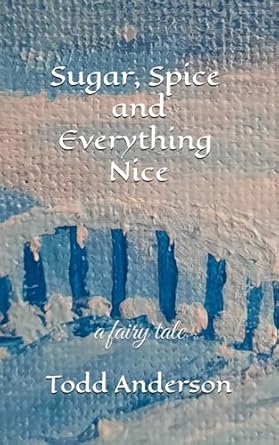
    I am excited to announce the official launch of the Sugar, Spice and Everything Nice Audio Book!

    Buy it today on the website or find it on a wide variety of Audio Book publishers, including Google, Audible, Libro.FM, Downpour, Kobo, Apple, and Spotify.

    I’m currently recording audio for additional titles to add to the Audio Book catalogue, with the next release scheduled for January 2026. Stay tuned for more!

    Todd Anderson (Stuff of the Rind, Sand and Sail, The Reluctant Prophet) writes the newsletter Mirth to share a behind-the-scenes look at his writing process as well as to offer readers the first fruits of his poetry and reflections. He grew up in the forests of small-town Ontario, contending against nature in all its beauty and harshness.  His training as a literary scholar of Latin and English literature inflects his love of poignant turns of phrase, but it is the influence of his family and their myriad adventures together that infuses his story-telling and poetry with its substance and power.  Todd lives and writes in Ottawa with his wife and six children. If you are interested in supporting Todd’s work, please follow the links below to donate or buy his books.

  • Grace

    Grace

    Subscribe to continue reading

    Subscribe to get access to the rest of this post and other subscriber-only content.

  • 40!

    40!

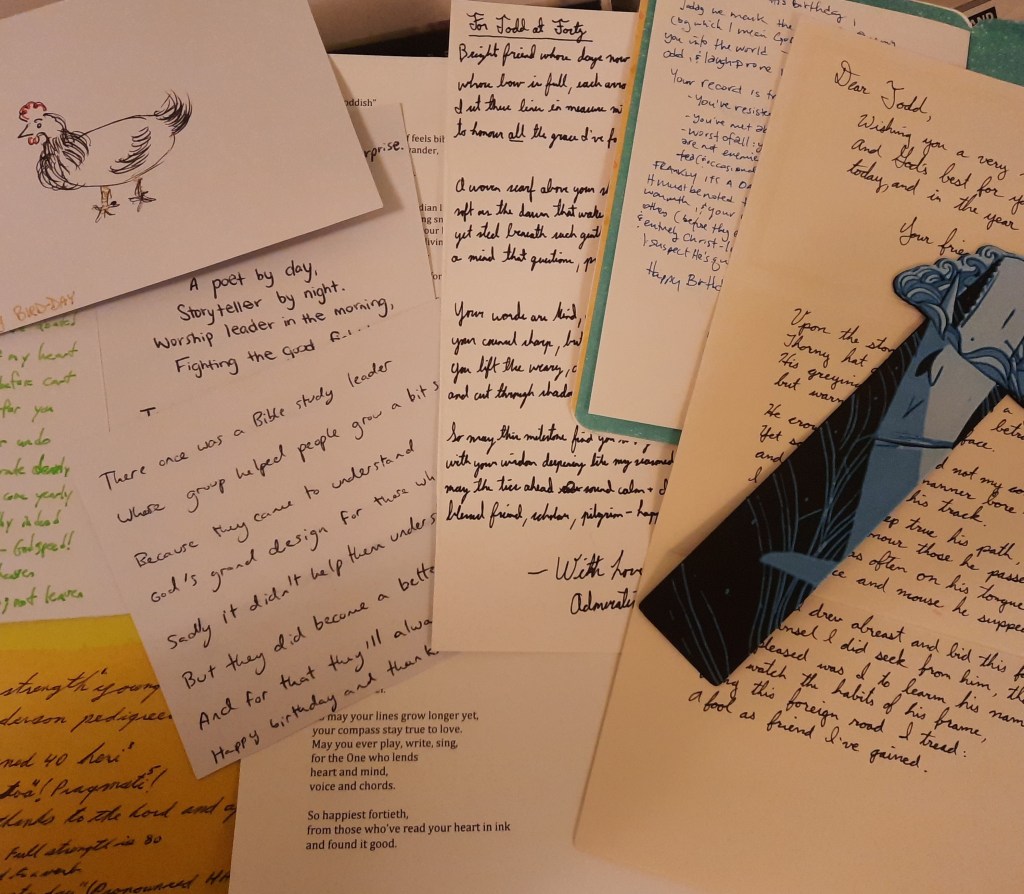
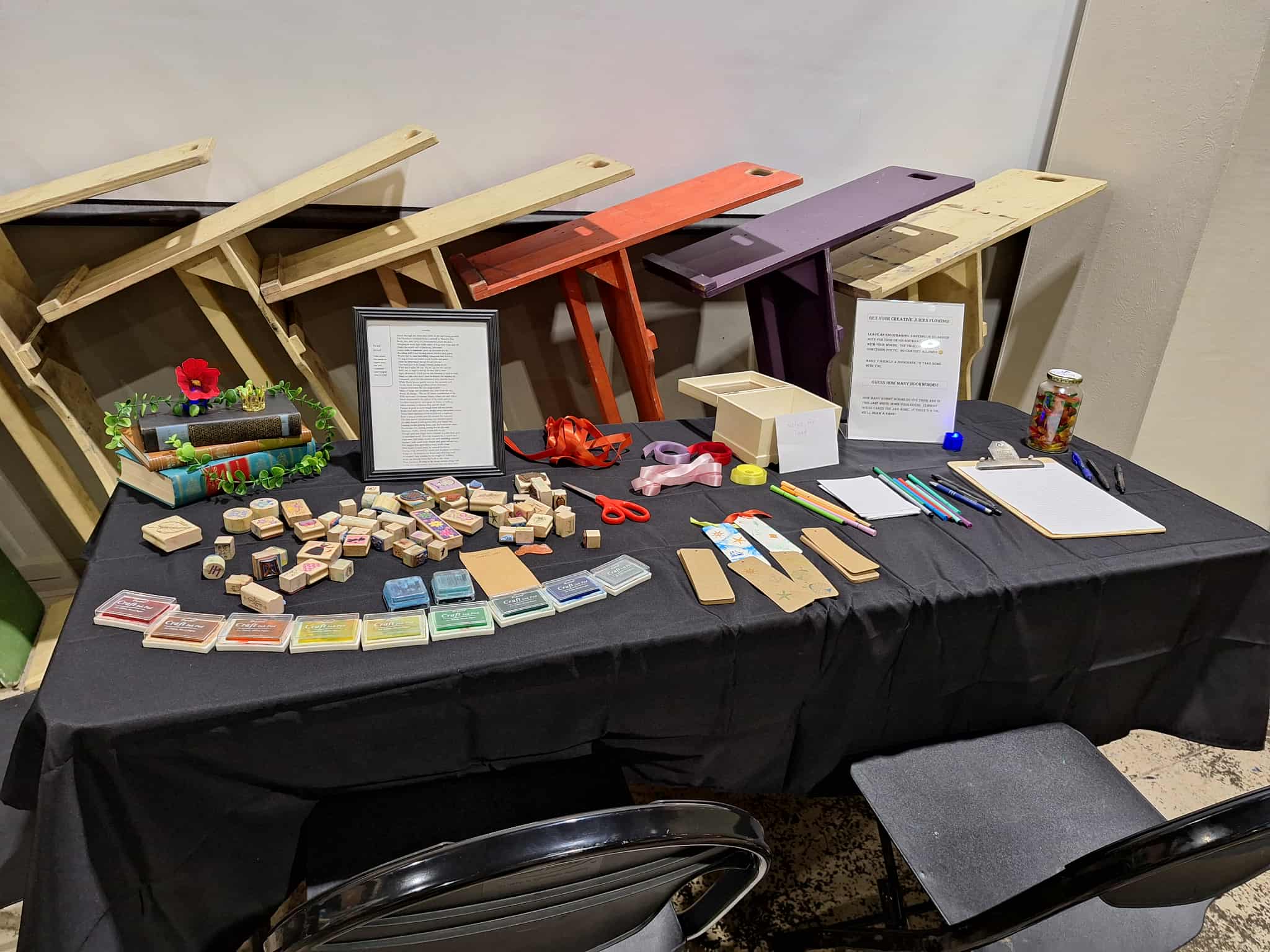
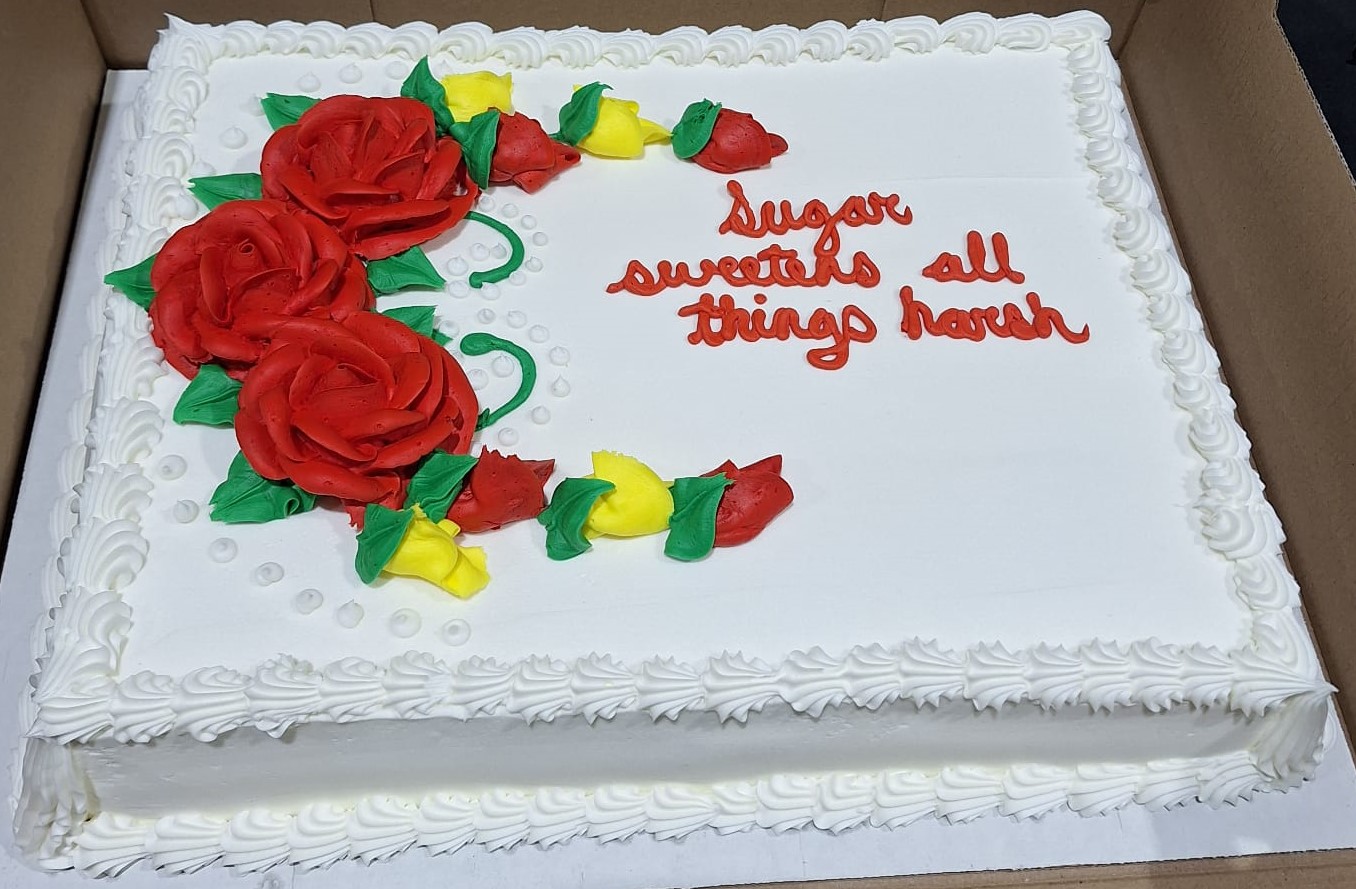
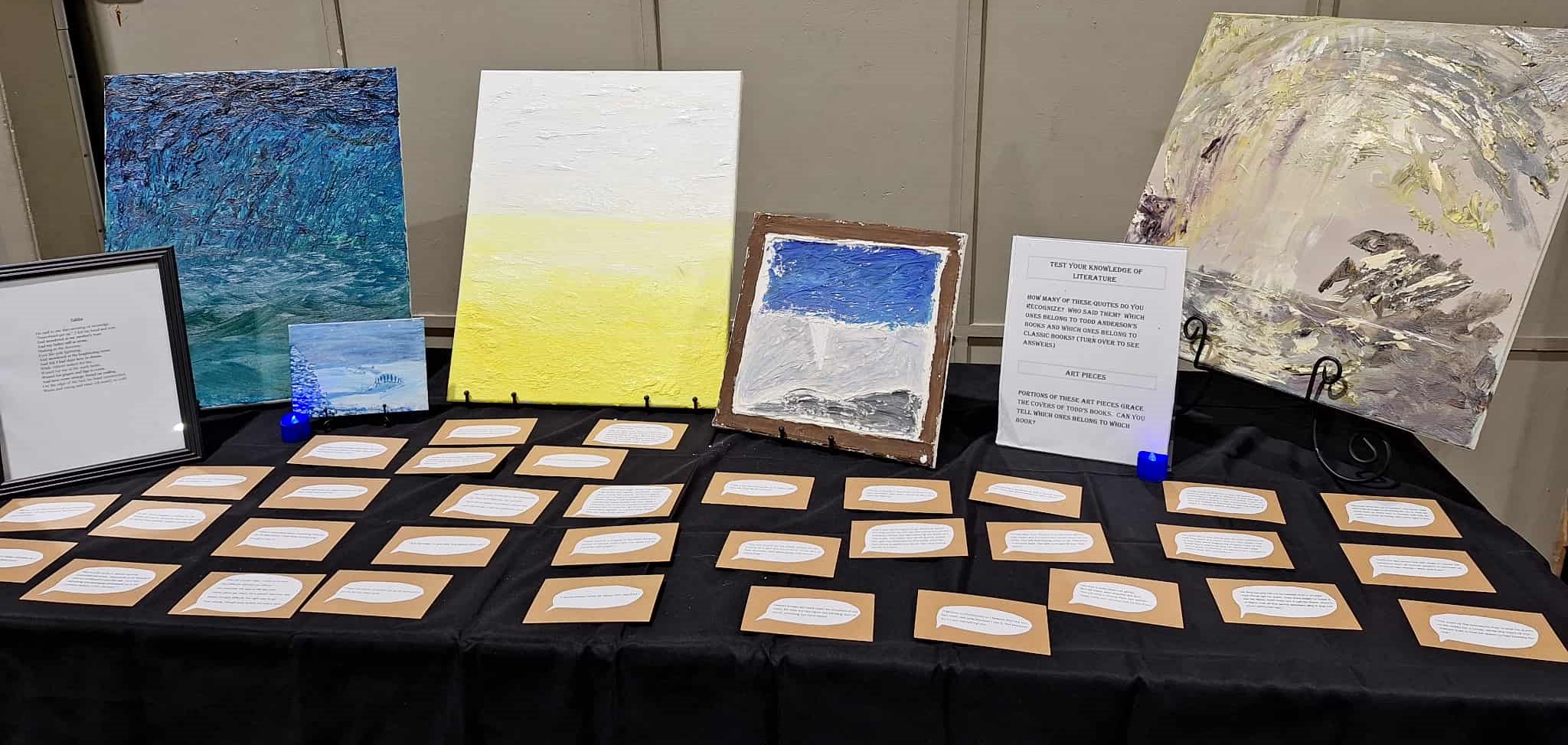
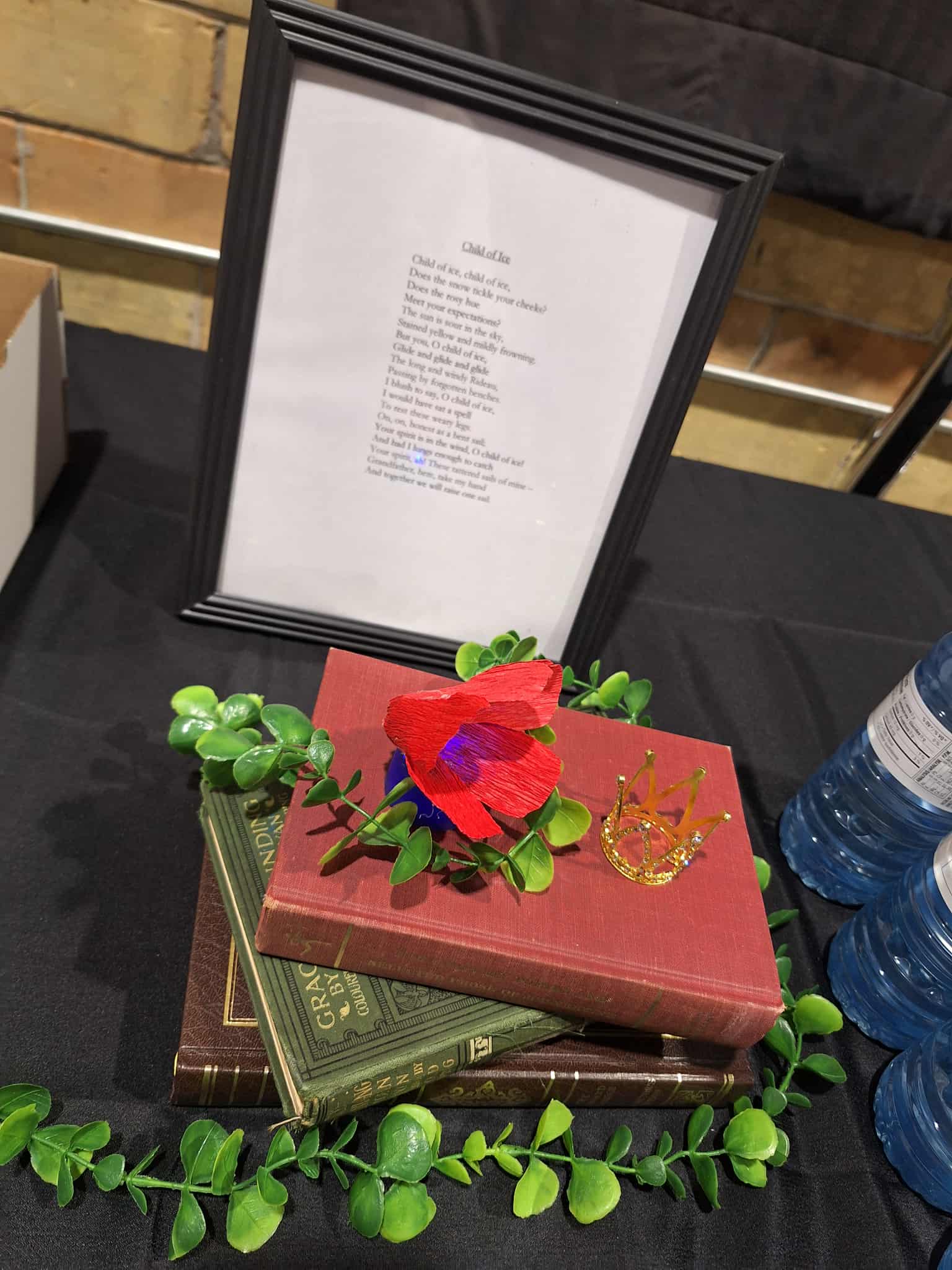
    For my 40th birthday, Heather and I decided to host three parties to help launch a very special book and to gather friends in Peterborough, Ottawa, and Cambridge to laugh, celebrate, and share in a fruitful season of writing.

    This past summer, I dove into a pile of manuscripts that lay patiently on the back shelf, dusted them off, edited feverishly and published a number of exciting works – pieces that deserved a better fate than wistful dreams languishing unfinished.  Heather (and my children) helped bring these dreams to life.  Not only by coordinating invitations, booking venues, designing layouts, preparing food, or hosting friends and family, but also by reading and listening faithfully to early drafts of prose and poetry while spurring me on to complete each book.

    Many of you also made these dreams reality.  You showed up and laughed and listened (or sent your very generous and heartfelt regrets).  You joined together as a community of readers, and your love and support are worth musing about for a few moments.

    I love reading readers.  At each party, I listened for the moments that made you snort or sigh.  Some of you snorted at the same moment that others sighed!  I leaned in when many of you said, “You know, I really liked the part when…”  or “was X a reference to…”  Young and old alike had something to say – something to contribute to a conversation that was worth having because it sparked moments of insight or delight.

    I enjoyed the chorus of poems I received as many of you echoed back your own skillful weaving of words.  It is a wonder to me.  Readers create a sense of community through this type of participation.  When we step out and join the fun, it binds us together.  My poem prompted your poem in response, which begat a third…and on it goes.  You did something.  And now, you are quite possibly in danger of making it a habit!  As Whitman, answering his own question, wrote in his poem “O Me! O Life”: the powerful play goes on, and you may contribute a verse.

    Like Whitman, I have been questioning life – plodding I think – and the questions articulated in I’ll Be Here testify to this state of mind.  What is eternal life?  What is it like in Heaven?  What will we do or see or say? Whitman’s answer doesn’t go far enough for my taste.  Yes, we can participate here and now; yes, each one has something unique to contribute.  But I don’t want to miss the reality that there is a Playwright crafting our scene, both here on Earth, and in the life to come.  And while circumstances here below do not always prompt joy and celebration, I think the main point of I’ll Be Here is to suggest that the scene goes on above – that we can trust Him. 

    Our reading parties have been a small taste of those eternal vignettes.  I hope you are inspired with fresh longing for literature and discussion that pushes back against so much of the banal, rude, crude, brutal, unsavoury chaff floating around in our everyday experience.  I wanted to gather friends and family around God-given imagination once more and urge everyone to toss a log on the fire – to rekindle a sacred flame so often doused by futile speech.

    I’m not quite finished dusting off these manuscripts, so look out for more to come.  But while you are waiting, why not dust off your own, or take out a pencil and send me a line of verse!  Thank you for all the love and support!

    Todd Anderson (Stuff of the Rind, Sand and Sail, Collected Poems) writes the newsletter Mirth to share a behind-the-scenes look at his writing process as well as to offer readers the first fruits of his poetry and reflections. He grew up in the forests of small-town Ontario, contending against nature in all its beauty and harshness.  His training as a literary scholar of Latin and English literature inflects his love of poignant turns of phrase, but it is the influence of his family and their myriad adventures together that infuses his story-telling and poetry with its substance and power.  Todd lives and writes in Ottawa with his wife and six children. If you are interested in supporting Todd’s work, please follow the links below to donate or buy his books.

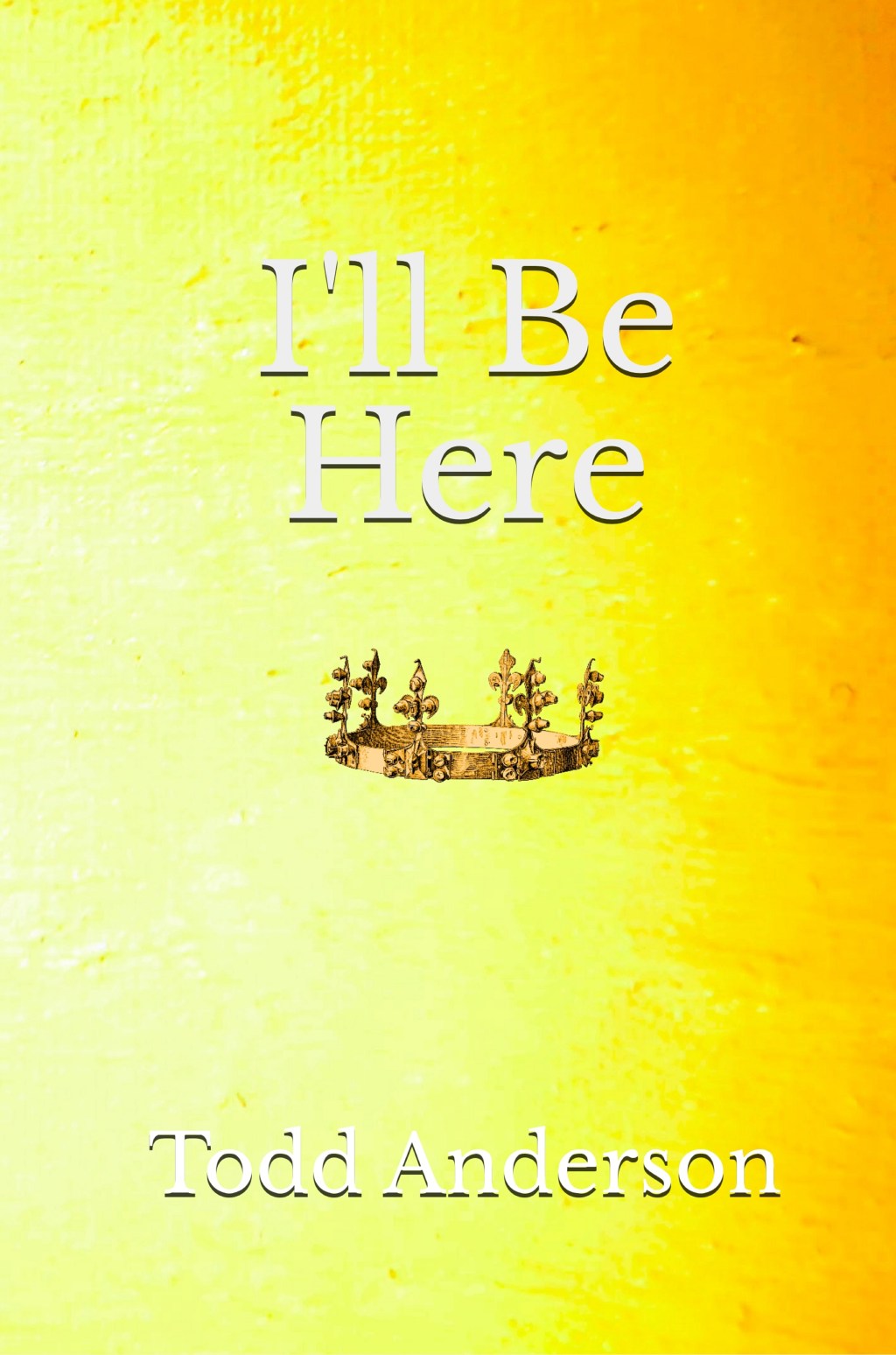
  • I’ll Be Here now available!

    I’ll Be Here now available!

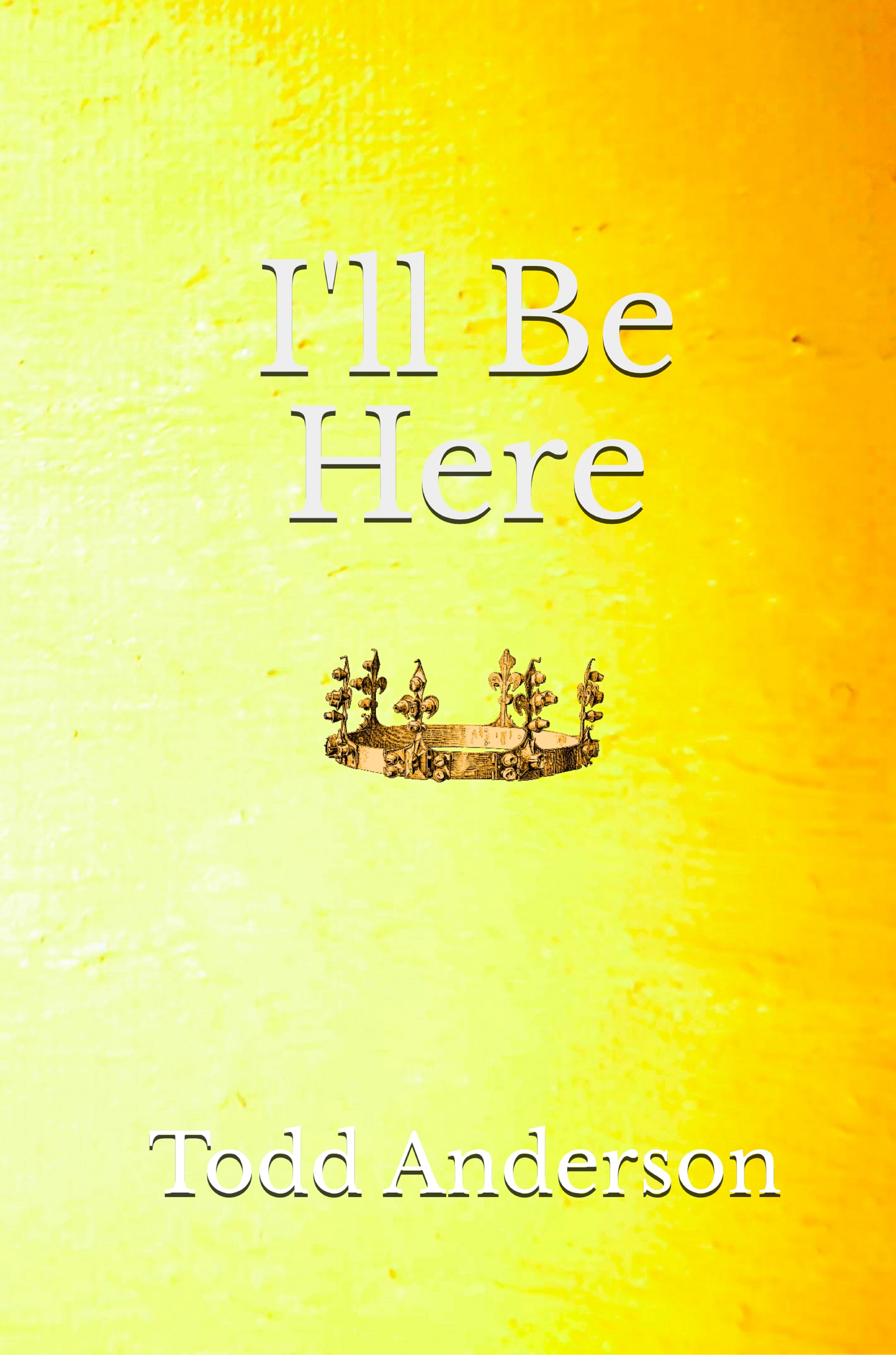
        Buy it today!    

    What if you could write to a loved one after passing about your first days in Heaven? How would you describe the freshness of your attention or your new-found urge to discover the boundless wonders of God’s grace? In I’ll Be Here, Todd Anderson captures the mystery and majesty of eternal life in the voice of Jenny, whose adventures beyond the pearly gates give us confidence that Christ will fulfill all our longings.