The sky behind the clouds Was baby blue and the clouds Were peach and stately canvas for the sun And the sun was marching Away from palette and brush And the palette was drying out But the brush was still full of oil And the oil mixed in the bristles And mixed on the canvas But the bristles could not know The magic they delivered to me that evening – A magic undisturbed by streets And shadows and dim lights That paint shadows from above the street – A magic trailing off to west And the peach clouds followed As sheep relaxed and pure Wander to the stable and find rest.
Todd Anderson (Stuff of the Rind, Sand and Sail, The Reluctant Prophet) writes the newsletter Mirth to share a behind-the-scenes look at his writing process as well as to offer readers the first fruits of his poetry and reflections. He grew up in the forests of small-town Ontario, contending against nature in all its beauty and harshness. His training as a literary scholar of Latin and English literature inflects his love of poignant turns of phrase, but it is the influence of his family and their myriad adventures together that infuses his story-telling and poetry with its substance and power. Todd lives and writes in Ottawa with his wife and six children. If you are interested in supporting Todd’s work, please follow the links below to donate or buy his books.
When women came at evening to draw, The foreigner stilled his thirsty camels. Clay jar in hand, Bethuel’s daughter Descended to the spring, as ev’ry virgin Descended, rising rich in water. Had he lingered while she passed, Shouldering her burden back to town, Another might have heard the cry, “I thirst” And felt a golden ring pierce her sweet nose. What lass could know the camels were a sign, Hard panting with a naked sun behind? Not nature, but her heart taught best to serve Where chores were thick and family most thin.
Todd Anderson (Stuff of the Rind, Sand and Sail, The Reluctant Prophet) writes the newsletter Mirth to share a behind-the-scenes look at his writing process as well as to offer readers the first fruits of his poetry and reflections. He grew up in the forests of small-town Ontario, contending against nature in all its beauty and harshness. His training as a literary scholar of Latin and English literature inflects his love of poignant turns of phrase, but it is the influence of his family and their myriad adventures together that infuses his story-telling and poetry with its substance and power. Todd lives and writes in Ottawa with his wife and six children. If you are interested in supporting Todd’s work, please follow the links below to donate or buy his books.
This week’s analysis concerns a piece from my Collected Poems in which a scene of Springtime gives rise to reflections on parting.
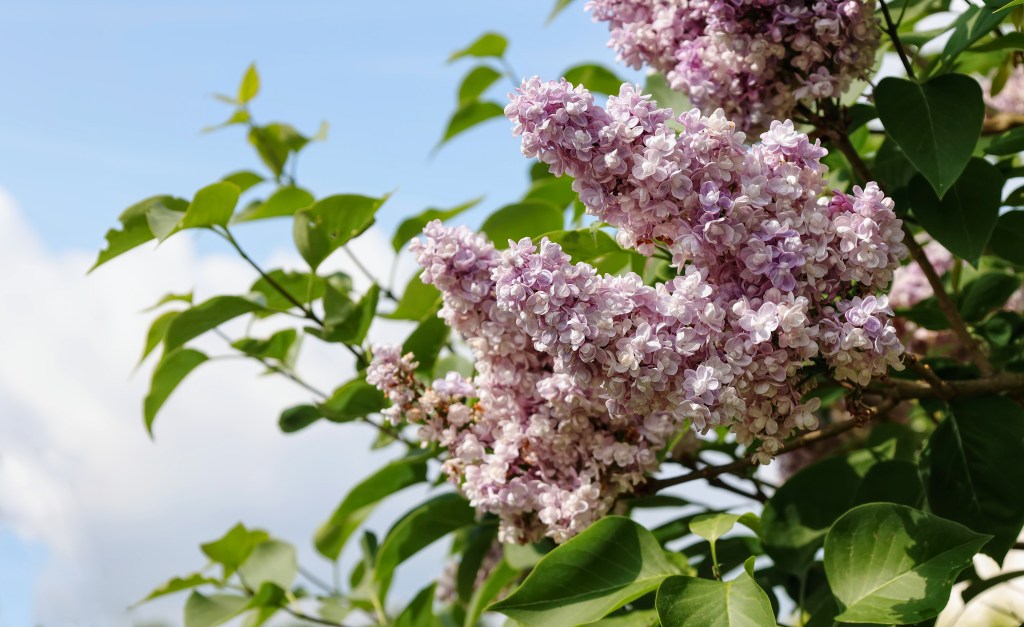
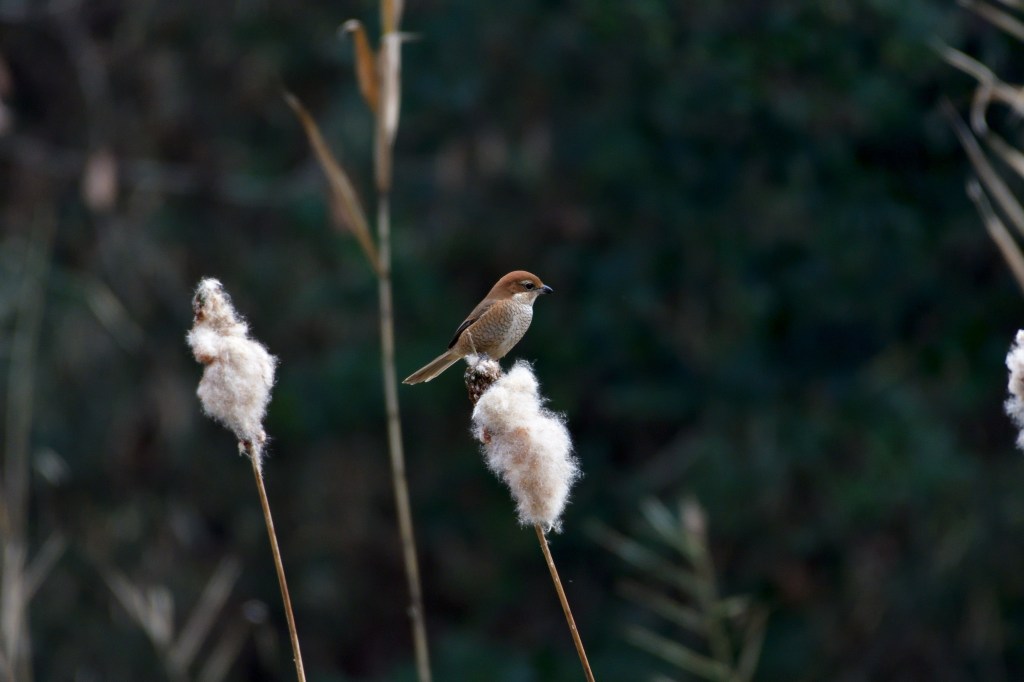
Sparrow I know her by her soft wings When she visits in springtime. Now gone among the lilacs at lakeside, My girl is gone from me. On the ridge a hedgerow hides a nest. Soft matins offered there When I pass early in the morn Offered no more. In mind’s eye, I see far off her low arc curl and cape. Flit and flit from branch to fledgling branch Dear one. You are not lost, Though all your yearnings yet remain. Where can we dwell If not in the heart of others?
Since the poem lacks a formal metrical structure and rhyme scheme, the lion’s share of the work is performed by syntax and alliteration. There are eight sentences in total; let’s unpack each.
I know her by her soft wings When she visits in springtime.
“When” is a relative pronoun that generates a temporal hypotactic clause. You do not need a technical description to feel this grammatical reality as you read, but it helps us articulate the poetic effect of the sentence. The first clause, “I know her by her soft wings”, since it arrives first in our minds, is experienced as a complete scene. Because it is in the present tense, we imagine the speaker’s knowledge of the “soft-winged” thing to be an on-going, existential one. We assume he sees this bird often, perhaps even on a daily-basis. “When”, in line two, arrests this blissful statement and rearranges it in light of another reality: time. It’s not merely that the speaker “knows” the sparrow when he sees it. Now his sight of the creature is constrained by discrete moments and seasons. The “when” binds the sentence – forcing a relationship between two clauses that might have stood on their own: “I know her by her soft wings. She visits in springtime”. This forced relationship between clauses is hypotaxis (hypo – “over” or “governed by” and taxis – “arrange” or “order”) and like other tools in a writer’s toolkit (metaphor, simile, rhyme, meter), establishes a pattern to be managed and accounted for.
Now gone among the lilacs at lakeside, My girl is gone from me.
This portion introduces two interpretive steps withheld by the first sentence. “Now gone” moves us from an ambivalent or hopeful reading of the first lines, in which the speaker was poised to tell us all about the wonderful visitation of his favourite bird just returned at the cusp of Spring. The reader associates this departure with the bird hinted at in the title and line one, but the second half of the second sentence forces another interpretive step. All this time, the bird was a metaphor for a girl, which causes the reader to reevaluate their reception of earlier lines, not by discarding the image of the bird, but by learning to see double – to carry forward bird and girl together. With this new pattern in place, phrases like lilacs at lakeside, which stand out due to the alliteration, are a fresh opportunity to imagine meaning in either direction. On the one hand, it is easy to envision a sparrow resting on lilac branches with their beautiful violet blossoms. On the other, “lilacs at lakeside“ becomes a symbol for affection between the speaker and the girl – perhaps a nostalgic scene of profession (if a romantic interpretation is in view) or familial wonder (if we imagine a mother or father watching their little girl pick flowers by the shore).
On the ridge a hedgerow hides a nest.
This sentence releases the emotional pressure of the previous two by steering our attention away from reflections on loss and away from bird and girl to an adjacent interest. Alliteration helps to loosen the heavy grip of nostalgia; “ridge a hedgerow hides” offers a playful auditory interlude – it is fun to say aloud (like a minor tongue-twister) and delivers a new subject not entirely detached from the lake or the lilacs, since it is nestled within them, but like all good nests, becomes a momentary reprieve from the danger of longing. Notice the interlocking pattern of sounds: r – dg – h – dg – r – h – d.
Soft matins offered there When I pass early in the morn Offered no more.
The nostalgic eye returns to devour this new object by repeating the temporal hypotaxis above, including the brief trick of a hopeful opening clause (“I know her by her soft wings”). Here we get, “soft matins offered there”, connecting the innocence of a hopeful morning song to a nest tucked away in the brush. The “when” in the second line both constrains and leaves unfulfilled the pressure of “offered there” because it is an incomplete thought, forcing the reader to incorporate “offered no more”, which sours the brief sweetness of the speaker’s regular habit. In other words, the hypotaxis forces the reader to experience the same sourness at the level of grammar, since we don’t want to move beyond the idyllic morning music of birds roused to rejoicing by spring sunrise.
In mind’s eye, I see far off her low arc curl and cape.
This sourness is extended by abstraction. The temporal hypotaxis deployed above, which allowed the speaker to relive the moment of the sparrow’s return and sweet morning walks hearing its song from a hidden nest, gives way to memory alone – removed from tangible encounters to a remote, intellectual apprehension. Hence the prepositional phrase that governs a new kind of inner sight and presses home the distance between speaker and bird. Again, alliteration steps in to bear the reader: f – r – f – l – r – c – c – r – l – c.
Flit and flit from branch to fledgling branch Dear one.
Finally, the speaker addresses the bird directly in the form of a command. The oldest forms of the verb “to “flit” meant, “to convey or carry”; this developed into the meanings “to flow, run,” and finally into our modern idea “to go swiftly, lightly or to dart.” All three etymological meanings are in view in the speaker’s imperative. He is saying to the bird or girl: “carry forward my love – bring it with you on your way”; “flow, float along, run untouched by sorrow and free from cares of this world”; “like a butterfly or the sparrow, embrace with joy and agility life’s opportunities, ready to pivot and turn.” The bird and girl are united in the substantive adjective “dear one”.
You are not lost, Though all your yearnings yet remain.
Here hypotaxis does opposite work to the temporal versions above. Instead of constraining our hope, the concession “though” reinforces it. “You are not lost” is proclaimed despite the presence of yearnings, which would be received in a fundamentally different spirit if it were structured, “You are not lost, but all your yearnings yet remain”. The yearnings are made subordinate – they are significant and impactful, but cannot overcome the reality of the girl’s identity and belonging. Charting a new course, beginning a fresh adventure, carries with it fears of the unknown, and especially the fear that a fledgling belongs neither to the nest it has left, nor to some new home it is searching out. “Although you may feel lost”, advises the speaker to this bird or girl, “this is part of the process by which you discover you are not lost”.
Where can we dwell If not in the heart of others?
The final turn in the poem, a rhetorical question governed by another hypotactic sentence, sharpens the theme of nostalgia to a point before driving it home. The condition “if” recapitulates the search for home (“where can we dwell”) by pointing out that what we are searching for (the bird on its fledgling journey and the speaker in his reminiscences) is not merely the presence of the beloved, which would render belonging and rest, but a new conception of home. To be at home is to be in the heart and mind of the other – for others to carry us in their hearts, to think of us, imagine our retorts and remonstrances. This transcends the pangs of physical distance. Moreover, we may dwell in the heart of many simultaneously. The poem concludes by reminding us that this spiritual dwelling is in fact the only true one – that we derive pleasure from our physical interactions and long for them precisely because we are already at home in the heart of others.
This piece was inspired by my eldest daughter’s departure for school in the Fall of 2025, but on re-reading it this week, I was struck by poetry’s readiness to be adapted to new circumstances. We are currently enjoying the presence of this sparrow, back from her adventures for a time, cognizant that she will depart once more, but confident that she is no less home.
Todd Anderson (Stuff of the Rind, Sand and Sail, The Reluctant Prophet) writes the newsletter Mirth to share a behind-the-scenes look at his writing process as well as to offer readers the first fruits of his poetry and reflections. He grew up in the forests of small-town Ontario, contending against nature in all its beauty and harshness. His training as a literary scholar of Latin and English literature inflects his love of poignant turns of phrase, but it is the influence of his family and their myriad adventures together that infuses his story-telling and poetry with its substance and power. Todd lives and writes in Ottawa with his wife and six children. If you are interested in supporting Todd’s work, please follow the links below to donate or buy his books.
When you hear them say, Albertos the Great has died, Believe only half their tall tale, for they have lied: Great was my sin, and greater yet the work to mend My smallness. Yet that labour, fault by fault, my friend Some years ago with pains and anguish undertook And carved at last my name with crimson in his book, Which I, from time to time, read with thanksgiving Since the pages do not hold the dead, but living.
Todd Anderson (Stuff of the Rind, Sand and Sail, The Reluctant Prophet) writes the newsletter Mirth to share a behind-the-scenes look at his writing process as well as to offer readers the first fruits of his poetry and reflections. He grew up in the forests of small-town Ontario, contending against nature in all its beauty and harshness. His training as a literary scholar of Latin and English literature inflects his love of poignant turns of phrase, but it is the influence of his family and their myriad adventures together that infuses his story-telling and poetry with its substance and power. Todd lives and writes in Ottawa with his wife and six children. If you are interested in supporting Todd’s work, please follow the links below to donate or buy his books.
Let May flower though it turns our hearts Toward th’incessant earth In search of beauty In search of striving Because we too are striving Though we don’t see Though we pretend not to see The ground with worms writhing A thousand May-born flies The ruminations of dappled coastland moors Above all the striving whispers of unharnessed wind In search and never finding home But on through dry and moist air rising Since it cannot tire It tangles hickory Ruffs crested feathers and bill While at marsh-end Swallow trill Enthroned on swaying bulrush
Let it flower and rest your joy In the unhurried earth Long years waiting for a reckoning As mastering man sews curse on curse Sweat and breath sewn and raised together Because we too are striving Because even in the garden When the earth had not yet learned to strive Since we had not yet plucked And scarred the tree Because it recoiled at our touch Though we were not as such filled with violence In search of immortality But since the waiting and the striving go on Palaverating creeks run their mouths And run to their mouths And spread over the earth the poison of man Because man’s searching leaves no thing untouched Despite which the soil endures
Let it flower despite these Because another striving Summons place to place And time to time Time striving for place And place searching for its time The divine search for resurrection That purer striving for home Because He too is striving Let May flower since it turns His heart Toward the restless earth
Todd Anderson (Stuff of the Rind, Sand and Sail, The Reluctant Prophet) writes the newsletter Mirth to share a behind-the-scenes look at his writing process as well as to offer readers the first fruits of his poetry and reflections. He grew up in the forests of small-town Ontario, contending against nature in all its beauty and harshness. His training as a literary scholar of Latin and English literature inflects his love of poignant turns of phrase, but it is the influence of his family and their myriad adventures together that infuses his story-telling and poetry with its substance and power. Todd lives and writes in Ottawa with his wife and six children. If you are interested in supporting Todd’s work, please follow the links below to donate or buy his books.
The following is a sneak peek at Chapter 1 of Snips and Snails, sequel to my fairy story, Sugar, Spice and Everything Nice.
The King’s Decree
Above the blooming sky and wide firmament, where thin-bound air runs free and joyful; above the celestial trails, where giants wander, greeting one another as strangers on an afternoon walk pass by with a singular nod; above even the congregations and cities of such massive beings, who attend to our skirted plains and ragged mountains as heavy-booted lumberjacks attend to their carpet and foot stools; above all these rose a great city, and at its centre a royal palace. Akoron the Mighty, whose eternal reign proceeded unblemished in the hearts of all his subjects, ruled with power colossal, unflinching wisdom, and stalwart joy. The Unrelenting. The Magnanimous. The Hunter. These titles and more had he accrued, and his court was filled with such as he. Akoron mounted his throne early in the week, and all eyes were upon him when he pronounced his royal decree:
“The Grey Stag has been sighted once again upon the Heath, far into the hinterlands. Send word to all Giant Land: The Great Hunt has begun once more! Let all hunters present themselves to the royal Master of the Lists to be registered. We will feast this week-long in the Great Hall and then I shall array my chariot in splendour and lead the hunt. Let it be decreed.”
“It is so!” came the reply, a chant from every voice in the court acknowledging and sealing Akoron’s word in keeping with ancient custom. The crowd erupted in cheers and Akoron raised his great fist and roared with a mighty roar, laughing and rejoicing in his might. For he had waited many seasons for a fresh sighting of the Grey Stag, and longed for the hunt as roots long for rain.
Day after day, the giants feasted in the Great Hall, planning their course and journey, sharpening their spears and trading stories of hunts long past. While they feasted, the jester Buttermilk sang and extolled in brilliant tales the exploits of the king. And as Buttermilk performed, the son of Akoron, Prince Snails, looked on and laughed with a fervent gaze fixed on the silver-tongued fool, whose garb shone with brilliant gems, gaudy colours and flowing cloth.
Now the Prince was one for mischief, having grown up free to roam. Despite his mother’s discipline and father’s love, which were rendered fully to the boy (he being neither codded nor hard done by, but justly weighed and granted every opportunity to display honour), Prince Snails from time to time would lose himself and act with rashness. In this nearest season of his life, his father had warned him not to scorn their entreatments, lest he be held back from the Great Hunt. For a time, this warning held fast in the heart of the young Prince, for he had not as yet partaken in the hunt, save in his imagination as he heard the bards sing in the great halls. But the feast, with all its excitement, proved too much for Snails, who hatched a plot to cause Buttermilk to tumble down and bring the whole house into riotous laughter just as he delivered the highest of the tales of Wintertide on the eve of the Great Hunt. And so it was that Snails sat, goblet in hand, eyes fixed on the low dais erected in the great Hall, while Buttermilk, in full festive costume, round as a world to the eyes of mortals (were we perched there in the glittering chandelier which lit the auburn walls), stepped up to the dais and laid one hand on the low railing. It creaked gently and Snails covered his mouth with his hand to choke back a squeal of delight. Buttermilk left off the railing and raised both hands alongside his face in earnest attention toward the ceiling, then began in low tones to lay the ground of his tale:
“When the abyss breathed forth the blackened mire And kingly grace had yet to clothe our lord, The Stag with antlers grey took to the spire And bent its will upon the rushing fjord.”
Buttermilk lowered his arms and let them rest gently on the rail, and Snails leaned in, ready for his moment. Squeezing the railing while pivoting sharply to his right, Buttermilk flung out his left arm to the crowd in a powerful gesture. With all of his weight pressed upon the railing for a brief moment, the sable wood, which Snails in secret had cut near the base, gave way, and with a hilarious yelp, Buttermilk tumbled off the dais on to a table filled with food and drink. The audience, save one, was stunned and a gasp cascaded through the crowd. Snails could not contain himself, but laughed full and loud, tears pouring down his face. He clutched his side and pounded his fist on the table. Buttermilk was lifted up by those nearby and helped back to his position; someone passed a glass of wine up to him to steady himself, and he drank a strong swig before wiping his mouth and looking around at the crowd. Then, to absorb their anxiety, he winked and stretched a broad smile across his face. The crowd roared out at his courage and many voices called out for the Fool to go on and tell his tale. Through all of this, King Akoron saw his son, though the Prince saw not that he was seen. But being King, Akoron bided his time, and when the festivities for the day had concluded, he ascended to his son’s room in the evening, sat quietly on the edge of his bed, and said in a gentle voice:
“You cannot come to the Hunt, my son.” And when the shocked Snails, face contorting in disbelief, raised his voice to protest, his father merely rose in silence and left the room.
“Father, oh father, please!” cried the bitter prince as Akoron walked down the hall. He moved as a tiger at ease, nor turned his head to heed his wayward child, but passed through a door to the royal chambers. The next morning, a missive came and lay on the end of Snails’ bed, detailing the royal decree, that he must stay and that Buttermilk the Fool was to be his guardian. Snails wept at the this more than the confinement, for in his own way he loved the Jester and his stories, and believed, when he saw the unsmiling face which greeted him that some rift had formed, and he did not possess the tact (or in truth, the strength of will) to repent. So it is for the young, who cannot face their shame. Is it not the same for young and old alike, when pain has sealed the doors to the heart? How then can we make amends?
Todd Anderson (Stuff of the Rind, Sand and Sail, The Reluctant Prophet) writes the newsletter Mirth to share a behind-the-scenes look at his writing process as well as to offer readers the first fruits of his poetry and reflections. He grew up in the forests of small-town Ontario, contending against nature in all its beauty and harshness. His training as a literary scholar of Latin and English literature inflects his love of poignant turns of phrase, but it is the influence of his family and their myriad adventures together that infuses his story-telling and poetry with its substance and power. Todd lives and writes in Ottawa with his wife and six children. If you are interested in supporting Todd’s work, please follow the links below to donate or buy his books.
“Don’t bother with friends,” Always struck me as poor advice, Which is why no one in their right mind Ever gives it as such, instead reserving Such sentiments for hard times, When the peel of mortality Is pulled back from our frail lives And for a moment we do not wish To see what the loss has meant, But only wish to feel the loss itself. Here is a remedy: make more than you can Keep. And keep in mind their mind, So that, days or years apart, you may Produce the fruit of friendship in a thought, Its candor and cadence, the head-back laugh And twinkle, or the wrought wisdom welding Truth to practice at an odd angle, Which only your one, obscure, entangled Friend could manage and no other.
Todd Anderson (Stuff of the Rind, Sand and Sail, The Reluctant Prophet) writes the newsletter Mirth to share a behind-the-scenes look at his writing process as well as to offer readers the first fruits of his poetry and reflections. He grew up in the forests of small-town Ontario, contending against nature in all its beauty and harshness. His training as a literary scholar of Latin and English literature inflects his love of poignant turns of phrase, but it is the influence of his family and their myriad adventures together that infuses his story-telling and poetry with its substance and power. Todd lives and writes in Ottawa with his wife and six children. If you are interested in supporting Todd’s work, please follow the links below to donate or buy his books.
And now the rain comes. We saw grey clouds swiftly charge, Felt as kindred spirits do At leave-taking, When eye follows eye And each lets fall stored sorrows; When Spring melt shocks Unexpecting rivers, Now burdened with too much water, And the crested banks o’erflow.
Todd Anderson (Stuff of the Rind, Sand and Sail, The Reluctant Prophet) writes the newsletter Mirth to share a behind-the-scenes look at his writing process as well as to offer readers the first fruits of his poetry and reflections. He grew up in the forests of small-town Ontario, contending against nature in all its beauty and harshness. His training as a literary scholar of Latin and English literature inflects his love of poignant turns of phrase, but it is the influence of his family and their myriad adventures together that infuses his story-telling and poetry with its substance and power. Todd lives and writes in Ottawa with his wife and six children. If you are interested in supporting Todd’s work, please follow the links below to donate or buy his books.
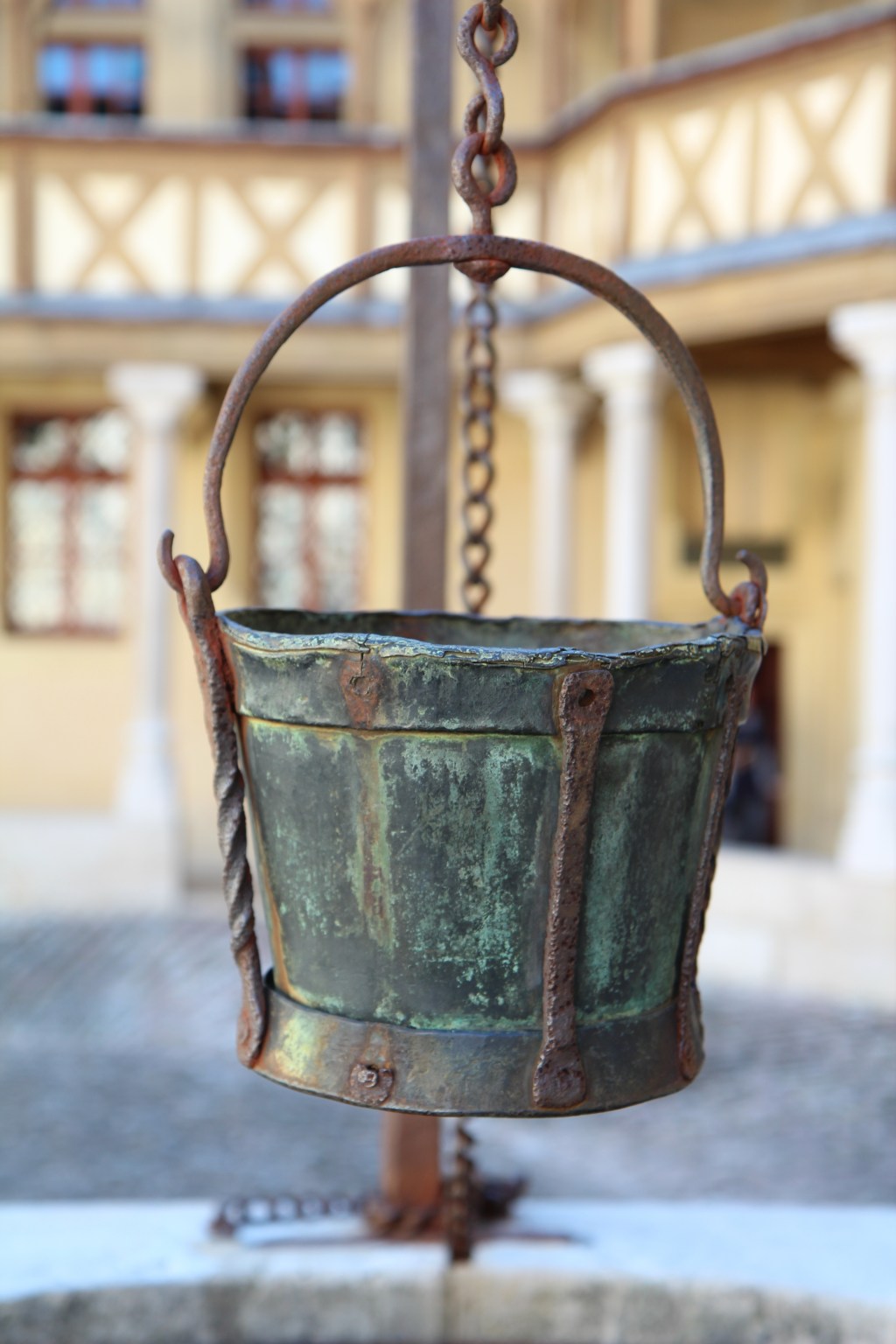
What shall we give to the Ocean When it calls out: “I thirst”? Who can slake parched waters? Is your bucket big enough? And at what stream will you supply Living water to satisfy His need?
Todd Anderson (Stuff of the Rind, Sand and Sail, The Reluctant Prophet) writes the newsletter Mirth to share a behind-the-scenes look at his writing process as well as to offer readers the first fruits of his poetry and reflections. He grew up in the forests of small-town Ontario, contending against nature in all its beauty and harshness. His training as a literary scholar of Latin and English literature inflects his love of poignant turns of phrase, but it is the influence of his family and their myriad adventures together that infuses his story-telling and poetry with its substance and power. Todd lives and writes in Ottawa with his wife and six children. If you are interested in supporting Todd’s work, please follow the links below to donate or buy his books.
Upon the broad and steadfast plain A quarrel gripped the gathered winds, Who boasted only they could beat And break the proud and silent ground.
So, each contrived to make it howl And tore the land with awful whips, Scattering fearful sheep and goats, Savaging leaf and stalk and grain.
Blow followed blow, terse as the rain That aimless strikes both head and heel. At last, the trembling ground gave way And groaned a long and loud complaint.
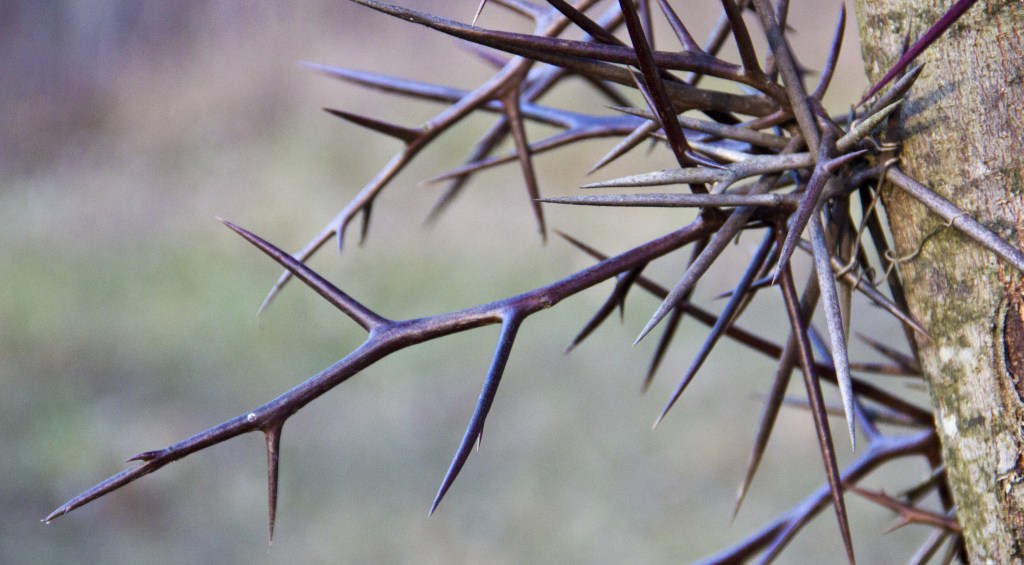
“Who struck you, land, and stirred your voice?” The plain gave no reply, so they With mockery sewed briar seeds In hope the ground would harvest pain.
Todd Anderson (Stuff of the Rind, Sand and Sail, The Reluctant Prophet) writes the newsletter Mirth to share a behind-the-scenes look at his writing process as well as to offer readers the first fruits of his poetry and reflections. He grew up in the forests of small-town Ontario, contending against nature in all its beauty and harshness. His training as a literary scholar of Latin and English literature inflects his love of poignant turns of phrase, but it is the influence of his family and their myriad adventures together that infuses his story-telling and poetry with its substance and power. Todd lives and writes in Ottawa with his wife and six children. If you are interested in supporting Todd’s work, please follow the links below to donate or buy his books.







 Todd Edward Anderson